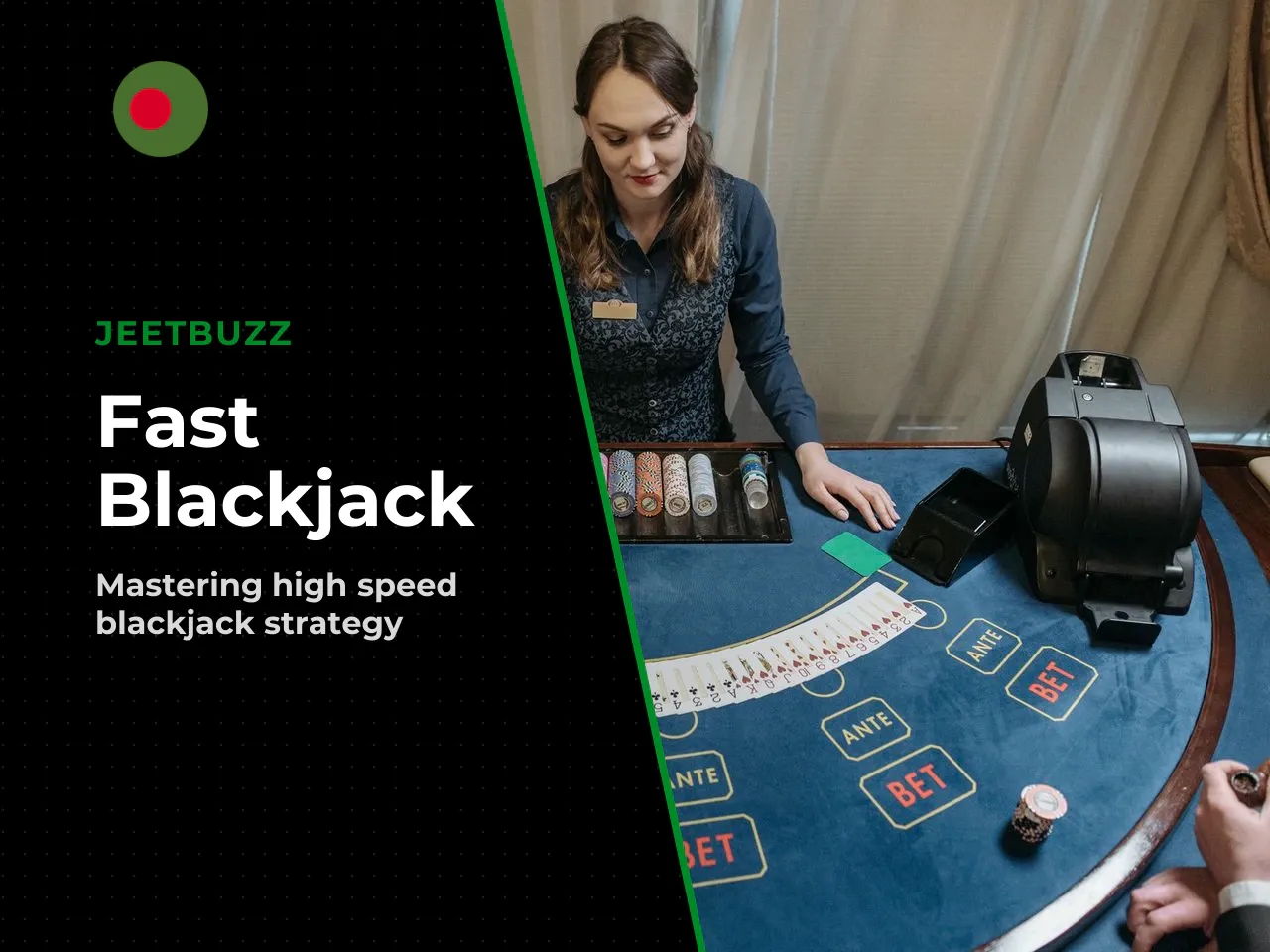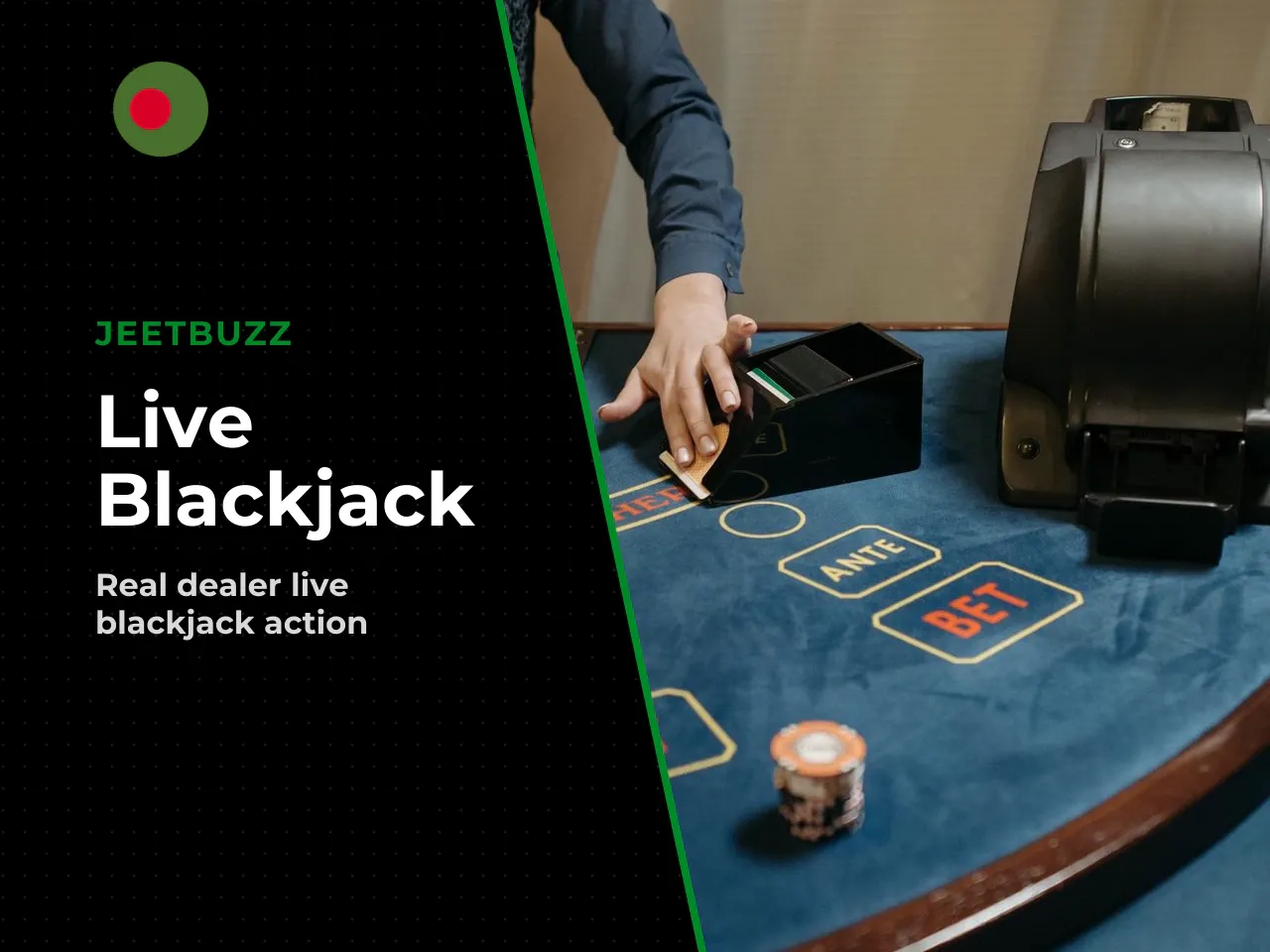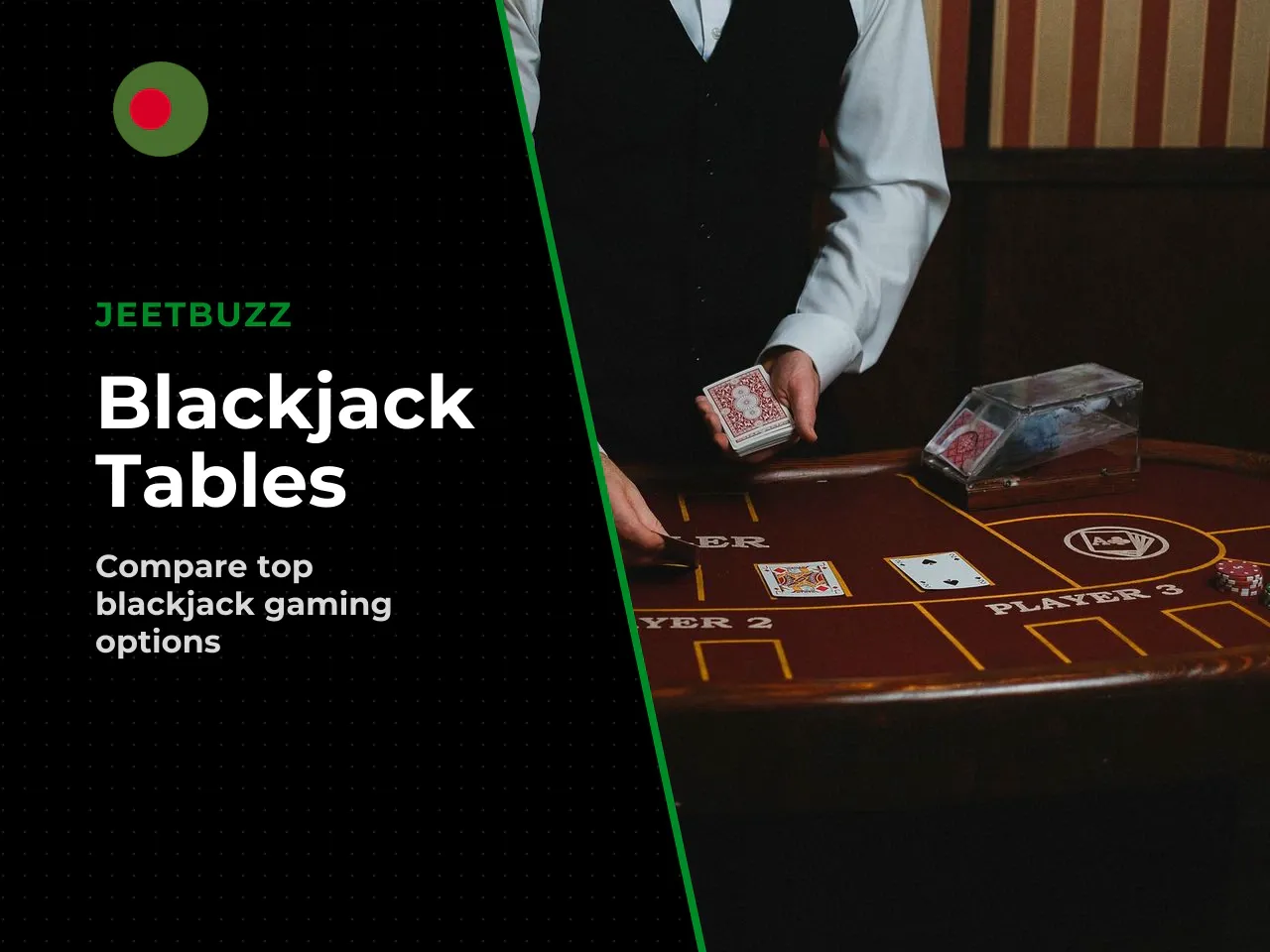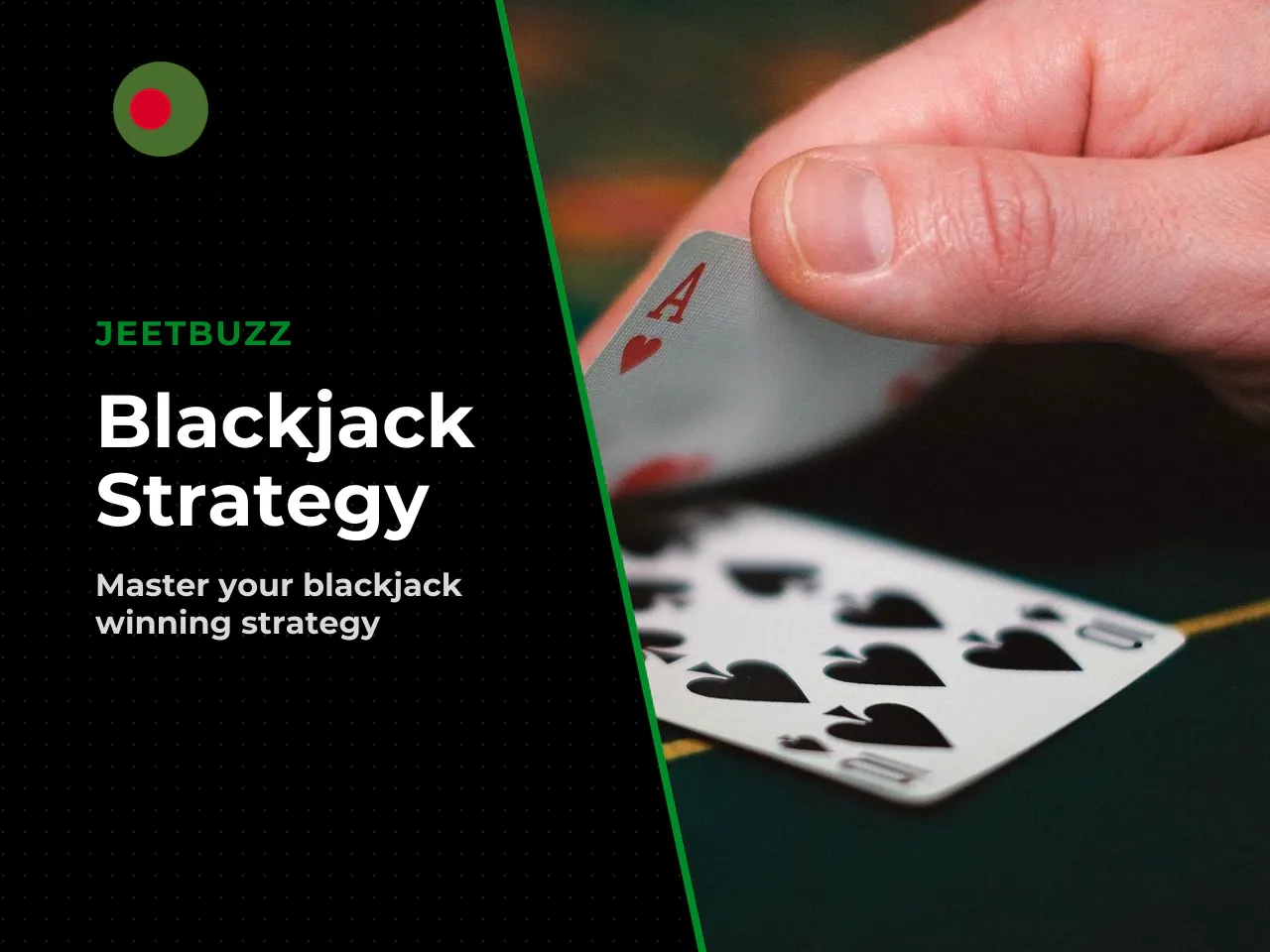
# Blackjack Online: How to Play Live and Real Money Blackjack *Last updated: June 2026 · Reviewed by the editorial team at [jeetbuzzx.com](https://jeetbuzzx.com)* Blackjack is a card game against the

Blackjack Online: How to Play Live and Real Money Blackjack

Last updated: June 2026 · Reviewed by the editorial team at jeetbuzzx.com

Blackjack is a card game against the dealer. Your goal is to reach 21 without going over. The house edge can drop to roughly 0.5% with basic strategy — lower than roulette (~2.7%) or slots (~2–10%+). That single number explains why millions of players keep coming back.

But here is the thing worth saying upfront. The casino always holds a mathematical advantage. Online play is faster than a physical table, which means losses can accumulate more quickly. Never wager money you cannot afford to lose.

This guide is for players who want to understand RNG versus live-dealer blackjack, evaluate bonuses honestly, and use responsible-gambling tools before placing a single real-money bet. Whether you are exploring blackjack online for the first time or comparing live blackjack formats, the sections below walk through every decision point — without the hype.

What Blackjack Is and Why Players Choose Blackjack Online. Blackjack is a card game where you compete directly against a dealer. Each participant receives cards, and the strategic choices — hit, stand

What Blackjack Is and Why Players Choose Blackjack Online

Blackjack is a card game where you compete directly against a dealer. Each participant receives cards, and the strategic choices — hit, stand, double down, or split — create a decision structure that sets blackjack apart from purely chance-based games like slots or roulette. When played with perfect basic strategy under standard rules, the house edge sits at approximately 0.5%. Compare that with about 2.7% for European roulette or anywhere from 2% to 10%+ for typical slot machines. This mathematical profile is a core reason many players gravitate toward the game.

That edge, though, is sensitive to the rules at the table. Variables include the number of decks, whether the dealer hits or stands on soft 17, whether doubling after splitting is permitted, and the payout ratio for a natural blackjack.

A general observation noted across multiple blackjack-strategy publications: switching from a one-deck game to a two-deck configuration can roughly double the house edge under otherwise standard rules. The precise figure depends on the full set of table rules — but the takeaway is clear. Rule changes that appear minor can have a measurable effect on expected return.

Key blackjack terms at a glance:

  • Dealer —the person (or software) dealing cards and playing against you
  • Hand —the cards you hold in a single round
  • Bet —the amount wagered before cards are dealt
  • Stand —choosing to take no more cards
  • Double —doubling your bet and receiving exactly one more card
  • Split —dividing a pair into two separate hands
  • Side bet —an optional extra wager alongside the main hand
  • Live dealer —a real human dealing cards via video stream
How Online Blackjack Differs from Blackjack Casino Play. On a physical casino floor, blackjack tables are limited by space, staffing, and operating hours. Online blackjack removes those constraints. A

How Online Blackjack Differs from Blackjack Casino Play

On a physical casino floor, blackjack tables are limited by space, staffing, and operating hours. Online blackjack removes those constraints. A player with a device and an internet connection can open a blackjack table at any hour, from any location where the service is legally available, without the overhead of travelling to a brick-and-mortar venue.

The differences go deeper than convenience, though. Speed is the most obvious one. In an online casino, RNG blackjack games can run 400–450 hands per hour in a solo session — roughly double the rate of a busy physical table. The interface is different too: tappable buttons replace verbal calls, and the game flow is compressed. You will find more blackjack tables and variants available simultaneously online than any single casino floor could host. Single-deck, multi-hand, European, Perfect Pairs, Zappit — the list keeps growing.

There is a flip side to this accessibility. When access to gambling is seamless — always one tap away — it becomes more of a routine daily behaviour than a special-occasion outing.

"Online gambling, integrated into the home routine, provokes more frequent and aggressive play, increasing the risk of addiction and financial losses." — LaTour & Cotte study summary, CasinoReports. https://www.casinoreports.ca/online-gambling-vs-traditional-casino/

note

Population-level survey data back this up. The share of players gambling exclusively online in New Jersey nearly tripled — from ~5% in 2017 to ~15% by 2023, according to a Rutgers University prevalence report. https://www.ncbi.nlm.nih.gov/pmc/articles/PMC10763454/

Why Blackjack Remains One of the Most Popular Card Games. What keeps blackjack at the top? A few reinforcing factors. First, the rules are genuinely simple. You can explain the basics in two minutes.

What keeps blackjack at the top? A few reinforcing factors.

First, the rules are genuinely simple. You can explain the basics in two minutes. Yet every hand involves an active decision — hit, stand, double, split — and that decision-making layer gives the game a strategic texture that pure-chance formats lack. It is the combination of simplicity and agency that hooks people.

Second, variety. Online platforms host dozens of blackjack games simultaneously. Classic six-deck, single-deck, European, multi-hand, side-bet variants — there is always something that fits a particular bankroll or mood. Physical casinos cannot match this breadth.

Third, cost of entry. Online blackjack tables often start at $0.50 or $1 per hand. A physical casino table might require $10 or $25 minimum.

This lower threshold makes the game accessible to a broader audience, including players who simply want to practise strategy with minimal financial exposure.

And fourth — this one matters for readers coming from a sports background — blackjack offers a fundamentally different experience from sports wagering. If you follow cricket or football markets, you are used to analysing external variables: team form, injuries, pitch conditions. Blackjack is a rapid-fire contest with a fixed mathematical house advantage. No research edge exists; the maths are the same every hand. Some players use a few blackjack hands as a diversion during halftime or between matches. The two activities complement each other rather than substitute for one another.

Think of blackjack as a maths-driven game of incremental decisions, not an information-driven market prediction. This recalibration of expectations is essential before playing for real money.

Types of Online Blackjack Games: RNG, Classic and Live Dealer

Online blackjack is delivered through two fundamentally different formats: software-driven random number generator (RNG) games and live-dealer games. The first uses an algorithm to simulate card dealing; the second streams a real human dealer from a studio. Both replicate the decision structure of the physical game, but the experience, pace, and trust dynamics differ considerably.

| Feature | RNG Blackjack | Classic Blackjack | Live-Dealer Blackjack | | -------------------------- | ---------------------------------------------- | --------------------------------- | ------------
FeatureRNG BlackjackClassic BlackjackLive-Dealer Blackjack
Pace400–450 hands/hour (solo)300–400 hands/hour50–80 hands/hour (shared table)
Dealer interactionNoneNoneReal-time chat with human dealer
Internet requirementLow to moderateLow to moderateHigh (HD video stream)
Minimum betsOften $0.50–$1Often $0.50–$5Typically $5–$25
Fairness mechanismCertified RNG / Provably FairCertified RNGPhysical cards + optical sensors + cameras
Demo mode availableUsually yesUsually yesRarely (some offer "Bet Behind" observation)
Average session length~18 minutes~18 minutes~36 minutes
Best forFast practice, low-stakes play, bonus clearingFamiliar interface, moderate paceAuthenticity, social play, high-rollers

Session-length data reference: EGR Intelligence Report (2022). https://egr.global/

note
Classic and RNG Blackjack for Fast Online Play. Classic online blackjack and RNG blackjack are software applications where a computer algorithm replaces the physical dealer and physical deck. The RNG

Classic and RNG Blackjack for Fast Online Play

Classic online blackjack and RNG blackjack are software applications where a computer algorithm replaces the physical dealer and physical deck. The RNG — a cryptographically secure pseudorandom number generator (CSPRNG) in reputable implementations — determines the order of cards. Modern approved constructions include NIST SP 800-90A Rev. 1 algorithms such as Hash_DRBG, HMAC_DRBG, and CTR_DRBG. The result is an automated game cycle: you place a bet, the software deals cards, you choose an action, and the outcome resolves instantly.

Speed is the defining characteristic. Because shuffling, dealing, collecting, and paying out are all handled by software, a solo player can reach 400–450 hands per hour.

"When playing one-on-one online, a player can reach 400–450 hands per hour — twice as many as in a land-based casino." — Anthony Lucas, UNLV Harrah College of Hospitality; cited by CasinoReports. https://www.casinoreports.ca/online-gambling-vs-traditional-casino/

note
This pace appeals to experienced players who want high-volume practice or fast bonus clearing. But — and this is worth pausing on — the rapid pace means losses can accumulate far more quickly than in

This pace appeals to experienced players who want high-volume practice or fast bonus clearing. But — and this is worth pausing on — the rapid pace means losses can accumulate far more quickly than in a traditional setting. A player who might lose $20 in an hour at a crowded brick-and-mortar table could theoretically lose several times that amount playing at full speed online.

Many blackjack classic and RNG games include a demo or practice mode. The flow is straightforward: open the demo table, select a chip denomination, place a fictitious bet, press Deal, receive two cards, complete the hand, see the result — all without risking real money. This feature is genuinely valuable for testing strategy or familiarising yourself with a variant's specific rules before committing funds.

Live Blackjack and the Live Dealer Experience. Live-dealer blackjack transplants the social and visual elements of a physical casino table into the online environment. A human dealer operates a real t

Live Blackjack and the Live Dealer Experience

Live-dealer blackjack transplants the social and visual elements of a physical casino table into the online environment. A human dealer operates a real table in a professionally equipped studio, and the action is streamed via high-definition video. Optical sensors and microchipped cards track every deal, automatically translating physical card movements into digital data. Your interface mirrors a physical table: bet chips placed on-screen, action buttons replacing verbal calls, and a chat window for communicating with the dealer and other seated players.

The technology behind leading live-casino providers — Evolution Gaming, Playtech, and Visionary iGaming among them — involves multi-camera setups (typically 3–7 angles per table), dedicated encoding hardware for low-latency streaming, and optical character recognition (OCR) systems that read card values in real time. The target broadcast latency is generally under 2 seconds.

Evolution, the market leader, operates large-scale studios in Latvia, Malta, Georgia, and several other locations. Playtech runs premium facilities in Latvia and Romania with branded VIP rooms and innovative variant tables. Visionary iGaming (ViG) focuses on the North and Latin American markets from its Costa Rica-based studios, offering a more boutique experience.

A 2023 industry survey reported by Gambling Compliance found that 68% of online casino players in the United Kingdom preferred live-dealer tables over RNG equivalents, citing authenticity and social interaction as the primary drivers.

"Real-time interaction with a live dealer has been associated with higher player retention across multiple industry datasets." — Gambling Compliance (2023). https://www.gamblingcompliance.com/

note

One practical note: the stable-internet requirement is non-trivial. Live streams consume significant bandwidth. A poor connection results in freezing, missed decision windows, and frustration. Each casino enforces a decision timer; if it expires, the hand is automatically treated as a stand. Players on mobile data or in regions with inconsistent connectivity should test their connection quality before joining a real-money live blackjack table.

How to Play Blackjack Online Before Choosing an Offer

Before you register anywhere or deposit a single dollar, it helps to understand the actual mechanics of playing blackjack online. The process is simpler than it looks — but a few details matter more than you might expect.

Choosing Blackjack Tables and Bet Options. Not all blackjack tables are created equal. When you open a blackjack lobby at an online casino, you will typically see a range of options: different variant

Choosing Blackjack Tables and Bet Options

Not all blackjack tables are created equal. When you open a blackjack lobby at an online casino, you will typically see a range of options: different variants, different bet limits, and different formats (RNG or live).

Here is what to look for when choosing a table:

  • Table limits. Match the minimum and maximum bets to your bankroll. If your session budget is $50, a table with a $25 minimum is a poor fit — you could be done in two hands. Look for tables where your standard bet is 1–2% of your bankroll.
  • Rule set. Check whether the dealer stands or hits on soft 17. Verify the blackjack payout — 3:2 is standard; 6:5 increases the house edge by approximately 1.4%. Look for tables that allow doubling after splits.
  • Side bets. Options like Perfect Pairs or 21+3 are available at many tables. They add excitement but carry a significantly higher house edge (often 3–10%+). Be aware of what you are opting into.
  • Number of seats (live tables). A shared live table means waiting for other players to act. If you prefer faster play, look for "Infinite Blackjack" or similar unlimited-seat formats where you play your own hand independently.

For players coming from sports betting, the table-selection process might feel oddly familiar. You are essentially shopping for the best odds — only here, the "odds" are embedded in the rule set rather than a market line.

Core Decisions During a Blackjack Hand

Core Decisions During a Blackjack Hand

Once you are seated, every hand follows the same basic flow. You place a bet. You receive two cards. The dealer shows one card face-up. Then you decide.

The key decisions:

  • Hit:Take another card. Optimal when your hand total is low relative to the dealer's potential.
  • Stand:Take no more cards. Optimal when your hand is strong enough that the risk of busting outweighs the benefit of improvement.
  • Double down:Double your bet and receive exactly one more card. Optimal when your hand total (typically 10 or 11) gives you a high probability of reaching a strong final total.
  • Split:Divide a pair into two separate hands, each with its own bet. Optimal for Aces and 8s in almost all rule sets.

Basic strategy is a set of mathematically optimal decisions for every combination of player hand and dealer upcard. It is derived from probability calculations across millions of simulated hands. Following basic strategy does not guarantee winning — the house still holds an edge — but it minimises that edge to approximately 0.5% under standard rules.

Simplified strategy reference for a common 6-deck game (dealer stands on soft 17):

| Your Hand | Dealer Shows 2–6 | Dealer Shows 7–Ace | | ---------------------- | ----------------------------- | ------------------------------------ | | **Hard 8 or less** | Hit | Hit | | **Hard 9**
Your HandDealer Shows 2–6Dealer Shows 7–Ace
Hard 8 or lessHitHit
Hard 9Double (if allowed), else HitHit
Hard 10Double (if allowed), else HitDouble if dealer shows 2–9, else Hit
Hard 11DoubleDouble (most cases); Hit vs. Ace
Hard 12–16StandHit
Hard 17+StandStand
Soft 17 (A-6)Double or HitHit
Soft 18 (A-7)Stand or DoubleStand vs. 7–8; Hit vs. 9–Ace
Pair of A's or 8'sSplitSplit
Pair of 10'sStandStand
*This is a simplified reference. For full strategy charts covering every two-card combination, consult dedicated resources. Always verify the specific rules at your table — number of decks, dealer hit

This is a simplified reference. For full strategy charts covering every two-card combination, consult dedicated resources. Always verify the specific rules at your table — number of decks, dealer hit/stand on soft 17, doubling after splits — as they affect optimal play.

Common mistakes worth avoiding:

  1. Taking insurance. Insurance is a side bet that the dealer has blackjack when showing an Ace. It pays 2:1, but the house edge on insurance is approximately 7% — one of the worst bets on the table.
  2. Standing on soft 17. With A-6, you cannot bust by hitting. Basic strategy calls for hitting or doubling in most situations.
  3. Splitting 10s. A hand totalling 20 is already very strong. Splitting it reduces expected value in virtually all scenarios.
  4. Chasing losses. Increasing bets after a losing streak (the "martingale" approach) does not change the house edge and dramatically increases the risk of bankroll depletion.
  5. Ignoring table rules. A 6:5 blackjack payout instead of 3:2 increases the house edge by approximately 1.4%. Always check before sitting down.
Pros
  • Real dealer, real cards, real-time interaction
  • Visual transparency — you watch every card dealt from a physical shoe
  • Social atmosphere with chat and dealer conversation
  • Measured pace (50–80 hands/hour) naturally moderates spending
Cons
  • Higher minimum bets (typically $5–$25+)
  • Requires stable broadband (5+ Mbps recommended)
  • Decision timer — miss it and your hand auto-stands
  • Rarely offers demo or free-play mode
Live Blackjack Online Casino vs Online Casino Blackjack. The distinction between live and standard online blackjack extends beyond surface aesthetics into measurable differences in player behaviour. W

Live Blackjack Online Casino vs Online Casino Blackjack

The distinction between live and standard online blackjack extends beyond surface aesthetics into measurable differences in player behaviour. Which format suits you depends on what you value most — speed, social interaction, visual trust, or budget flexibility.

Live blackjack online casino — strengths and limitations:

Standard online casino blackjack — strengths and limitations:

  • ✅ Very low stakes available ($0.50–$1 per hand)
  • ✅ Fast pace for practice or bonus clearing
  • ✅ Demo mode widely available — play without risking money
  • ✅ Works on slower connections and older devices
  • ❌ No dealer interaction or social element
  • ❌ Trust is delegated entirely to software and certification
  • ❌ Speed can lead to faster bankroll depletion if unchecked

Analytical data indicate that live-dealer sessions last approximately 36 minutes on average compared with roughly 18 minutes for RNG sessions. Live sessions are associated with approximately 40% longer playtime, which translates into higher cumulative wagering volume.

When Live Dealer Blackjack Is the Better Fit. If you value authenticity, [live blackjack](https://jeetbuzzx.com) is the obvious choice. Watching a dealer shuffle, deal, and flip cards creates a psycho

When Live Dealer Blackjack Is the Better Fit

If you value authenticity, live blackjack is the obvious choice. Watching a dealer shuffle, deal, and flip cards creates a psychological connection that software simply cannot replicate. The 68% preference figure from Gambling Compliance's 2023 UK survey reflects this — players cite authenticity and social interaction as the primary drivers.

Live dealer blackjack also suits high-rollers. VIP tables with $250–$10,000 minimum bets offer a premium experience — branded rooms, dedicated dealers, and sometimes personalised service. The slower pace (50–80 hands per hour on a shared table) naturally moderates spending, which can be a genuine advantage for players who tend to play impulsively.

One practical consideration for players in South and Southeast Asia, including Bangladesh: internet stability matters. If your mobile connection drops during a live hand, the decision timer expires and the software stands on your behalf. Test your connection before committing real money to a live session.

When Standard Online Blackjack Is More Practical. RNG blackjack is the pragmatic choice for several scenarios. If you are new to the game, demo mode lets you practise strategy without financial risk —

When Standard Online Blackjack Is More Practical

RNG blackjack is the pragmatic choice for several scenarios. If you are new to the game, demo mode lets you practise strategy without financial risk — something live tables rarely offer. If your bankroll is modest, $0.50 minimum bets stretch your session considerably further than $5 live-table minimums.

For players clearing a bonus with a tight expiry window, the speed of RNG play (400+ hands per hour) is a significant advantage. And for anyone in a region with variable mobile internet quality, RNG blackjack loads faster, requires less bandwidth, and does not freeze when signal quality drops.

Most platforms use a single wallet that works across both formats. Once you have confirmed a stable connection, transitioning from RNG to live tables is seamless — no separate account or balance transfer needed.

Playing Blackjack Online for Real Money: What Matters Before You Start

Disclaimer: The information in this section is general in nature and does not replace legal or financial advice. Online gambling for real money is regulated by the laws of your jurisdiction. Confirm its legality in your location before playing.

disclaimer
Real Money Blackjack Expectations and Bankroll Mindset. The transition from free-play to [real-money blackjack](https://jeetbuzzx.com) is the most consequential step an online blackjack player takes.

Real Money Blackjack Expectations and Bankroll Mindset

The transition from free-play to real-money blackjack is the most consequential step an online blackjack player takes. In demo mode, losses are abstract. With real money, every decision carries a financial outcome.

The house always wins on average. Even with a house edge of 0.5%, the casino holds a long-term mathematical advantage. Over thousands of hands, the expected outcome for the player is a net loss equal to roughly 0.5% of total amount wagered. Short-term results can be positive — that is the nature of variance — but the structural expectation is negative. Worth repeating: this is a game of entertainment, not income.

Bankroll management is essential. Before your first real-money hand, establish:

  1. A session budget — the maximum you are prepared to lose in a single session. This should be money you can afford to lose entirely without affecting your daily life.
  2. A bet-sizing rule — a commonly cited guideline is to keep individual bets to 1–2% of your total blackjack bankroll. If your bankroll is $500, that means $5–$10 per hand.
  3. A stop-loss trigger — decide in advance at what loss point you will leave the table. Some players use 50% of session bankroll; others set time limits.
  4. A win target (optional) — some players lock in profits by leaving after reaching a predetermined gain. This does not change the maths but can impose useful session discipline.
Account Setup, Payment Options and Access to Games. Opening a real-money account at an online blackjack casino follows a standard procedure: 1. **Register** — provide email, create a password, and ent

Account Setup, Payment Options and Access to Games

Opening a real-money account at an online blackjack casino follows a standard procedure:

  1. Register — provide email, create a password, and enter basic personal details.
  2. Verify identity (KYC) — upload government-issued ID and proof of address. Regulations under FATF's Risk-Based Approach Guidance for Casinos (2023) require operators to verify customer identity as part of anti-money-laundering (AML) controls.
  3. Deposit funds — choose a payment method and transfer your session budget.
  4. Access games — navigate to the blackjack lobby and choose your table. Access is usually immediate, subject to jurisdictional restrictions.

Payment methods and transaction speed in 2026:

| Payment Method | Typical Deposit Speed | Typical Withdrawal Speed | Fees | | -------------------------------------------------------- | --------------------- | ------------------------ | -----------
Payment MethodTypical Deposit SpeedTypical Withdrawal SpeedFees
Credit/Debit Card (Visa, Mastercard)Instant1–5 business daysLow to none on deposit; variable on withdrawal
Cryptocurrency (Bitcoin, Ethereum, Litecoin, Tether)10–60 minutes10 minutes–24 hoursUsually zero platform fee
E-Wallets (Skrill, Neteller, ecoPayz)Instant24–48 hoursLow; some platforms charge small withdrawal fee
Bank Transfer1–3 business days3–7 business daysMay include wire fees
Cryptocurrency transactions are increasingly popular because they combine speed with low or zero fees. However, they require familiarity with wallet setup and blockchain confirmations. Traditional car

Cryptocurrency transactions are increasingly popular because they combine speed with low or zero fees. However, they require familiarity with wallet setup and blockchain confirmations. Traditional card deposits remain the most accessible method for most players.

When comparing casinos, pay attention to minimum/maximum withdrawal limits, withdrawal fees (the first monthly withdrawal may be free, but subsequent ones might incur a charge), and processing time — crypto withdrawals often settle within 24 hours while fiat withdrawals can take 3–7 business days.

Pre-transition checklist (free play → real money):

  • Bankroll is set aside — not money needed for rent, food, or bills
  • ID documents are ready for KYC verification
  • Deposit and withdrawal methods have been reviewed (fees, limits, processing times)
  • Responsible-gambling tools (deposit limits, session timers) are configured
  • The casino's licence has been verified on the regulator's public register

Real-money blackjack tables typically offer these stake ranges: RNG tables from $0.50–$500 per hand, and live-dealer tables from $5–$10,000+ per hand. Popular side bets include Perfect Pairs (5:1 to 30:1), 21+3 (5:1 to 100:1), and Insurance (2:1). Remember: side bets carry a significantly higher house edge than the base game — often 3% to 10%+. They add excitement but increase expected losses.

Online Blackjack Bonus: How Offers Create Value

Online casinos use bonuses to attract and retain players. But not every bonus is actually worth claiming — especially for blackjack. The headline number matters far less than the fine print.

Which Bonuses Can Apply to Blackjack Play

Three main categories are relevant:

1. Welcome bonuses (deposit match). These are one-time sign-up offers, typically structured as a percentage match on your first deposit — for example, 200% up to $2,000. However, casinos often limit blackjack's contribution to bonus clearing. Some casinos credit only 10% of blackjack wagers toward the wagering requirement, while slot bets count at 100%.

"Some casinos credit only 10% of blackjack wagers toward wagering requirements, while slot bets count at 100%." — BlackjackReview, Wagering Requirements Explanation. https://www.blackjackreview.com/

note
**2. Live-casino exclusive bonuses.** These promotions are restricted to live-dealer tables and therefore align well with blackjack. They may come as a deposit match, free bet credits, or cashback spe

2. Live-casino exclusive bonuses. These promotions are restricted to live-dealer tables and therefore align well with blackjack. They may come as a deposit match, free bet credits, or cashback specifically on live table losses. Because they are designed for the live environment, the wagering contribution for blackjack is often higher — sometimes 25–50%.

3. Cashback offers. Cashback returns a percentage of net losses (commonly 5–15%) as bonus credit or withdrawable cash. This type is the most directly beneficial for blackjack players because it applies after play, effectively reducing the net house edge. Cashback does not require specific game selection and is often the simplest bonus to evaluate.

Terms to Check Before Claiming a Blackjack Offer

Wagering requirements (also called "playthrough" or "rollover") are the multiplier that determines how much you must wager before bonus funds can be withdrawn as cash. They are the single most important factor in assessing whether a bonus has real value.

"A bonus of 100 units with a 35× wagering requirement obliges a player to place 3,500 units of qualifying bets — casinos intentionally set high requirements so that the house edge has time to erode bonus value." — UTHSCSA Neurosurgery Dept., Wagering Requirements Educational Primer. https://uthscsa.edu/

note
To illustrate: if you receive a $100 bonus with a 35× rollover and blackjack counts at 10%, you need to wager $35,000 in blackjack ($100 × 35 / 0.10) to clear the bonus. At a 0.5% house edge, your exp

To illustrate: if you receive a $100 bonus with a 35× rollover and blackjack counts at 10%, you need to wager $35,000 in blackjack ($100 × 35 / 0.10) to clear the bonus. At a 0.5% house edge, your expected loss on $35,000 of wagering is $175 — meaning the $100 bonus costs you more than it is worth. This is why the game-weighting percentage is critical. Sometimes a smaller but more usable offer beats a flashy headline number.

Five-step checklist for evaluating a blackjack bonus:

  1. Registration conditions: Is a bonus code or opt-in required? Is there a minimum deposit? Is KYC verification needed before the bonus activates?
  2. Eligible game variants: Which blackjack titles qualify? Often, "Classic Blackjack" and "European Blackjack" are included, while "Blackjack Switch" or multi-hand variants are excluded.
  3. Wagering requirement and game weighting: What is the multiplier (e.g., 35×)? What percentage do blackjack bets contribute (10%, 25%, 100%)?
  4. Maximum bet during bonus play: Many bonuses cap bets at $5–$10 per hand while active. Exceeding the limit can void the bonus and all associated winnings.
  5. Expiry period: Bonuses typically expire 7–30 days after activation. The trend is toward shorter windows.
| Bonus Element | What to Look For | Red Flag | | ---------------------- | ---------------------------------- | ------------------------------------ | | Wagering multiplier | 20×–30× (good); 35×–50× (
Bonus ElementWhat to Look ForRed Flag
Wagering multiplier20×–30× (good); 35×–50× (standard)50×+ on blackjack with 10% weighting
Blackjack contribution25%+0%–5%
Max bet limit$10+ per hand$2–$3 per hand
Expiry21–30 days7 days or fewer
Side-bet eligibilitySide bets count toward wageringSide bets excluded entirely
How to Choose the Best Blackjack Casino or Online Blackjack Casino. Picking the right platform is not just about who offers the biggest bonus. A strong blackjack casino earns trust through transparenc

How to Choose the Best Blackjack Casino or Online Blackjack Casino

Picking the right platform is not just about who offers the biggest bonus. A strong blackjack casino earns trust through transparency — clear terms, verifiable licensing, fair software, and responsive support. Here is what to actually check.

Verification criteria before you deposit:

  • The casino holds an active licence from a recognised regulator (UKGC, MGA, Gibraltar, or equivalent). You can verify this on the regulator's public register using the licence number displayed in the site footer.
  • Independent audit seals from eCOGRA, iTech Labs, or GLI are visible and verifiable.
  • Terms and conditions are accessible, clearly written, and include specific blackjack rules for bonuses.
  • Payment options are listed transparently with fees, limits, and processing times.
  • Responsible-gambling tools (deposit limits, session timers, self-exclusion) are available and functional.

"A 2023 iTech Labs report confirms that the Entain blackjack RNG passed industry-standard statistical tests for randomness." — iTech Labs, RNG Certification Report, Entain (2023). https://www.itechlabs.com/

note

Game Variety, Software and Available Blackjack Tables

When evaluating a casino for blackjack play, the breadth and depth of its game library matter. A strong blackjack casino should offer multiple variants — classic six-deck, single-deck, double-deck, European, Perfect Pairs, Zappit, and others — alongside live-dealer blackjack tables with a range of bet limits.

The software provider determines visual quality, rule sets, and fairness infrastructure. Leading providers in 2026 include:

  • Evolution Gaming —the dominant live-casino supplier, known for multi-angle HD streams, a vast variety of tables (including Infinite Blackjack with unlimited seats), and studios across Europe and North America.
  • Playtech —a major competitor with premium studio production, innovative side-bet variants, branded VIP rooms, and strong European/Asian regulatory coverage.
  • Visionary iGaming (ViG) —a boutique provider focused on the Americas, operating from Costa Rica, with a player-friendly mobile interface and competitive low-minimum tables.

For RNG games, providers such as BetSoft, Rival Gaming, and RealTime Gaming (RTG) produce well-regarded digital blackjack titles. A quality signal to look for: clear rule displays on the game screen showing number of decks, dealer soft-17 behaviour, and doubling/splitting rules.

Bonuses, Payments and User Interface. Beyond game selection, the sign-up flow and day-to-day usability of a platform shape the overall experience. A well-designed mobile interface should feature respo

Bonuses, Payments and User Interface

Beyond game selection, the sign-up flow and day-to-day usability of a platform shape the overall experience. A well-designed mobile interface should feature responsive layout that adjusts to screen size without horizontal scrolling, clear tappable action buttons (Hit, Stand, Double, Split) sized for thumb navigation, fast load times — ideally under 3 seconds on a 4G connection for RNG games — and seamless wallet integration allowing one-tap switching between RNG and live tables using a single account balance.

For live-dealer play on mobile, verify that your connection is stable. A minimum of 5 Mbps is generally recommended for smooth HD streaming.

Players in regions with variable mobile internet quality — including parts of Bangladesh and broader South Asia — should test connectivity before committing to a real-money live session.

Bonuses and payment options round out the picture. Compare not just the headline bonus amount but the terms (as outlined in the bonus section above). Check whether the platform supports your preferred payment method with reasonable fees and processing times. And verify that the account creation and KYC process is straightforward — a clunky sign-up flow is sometimes a warning sign of broader operational issues.

Safety, Fairness, and Responsible Play in Online Blackjack

Safety, Fairness, and Responsible Play in Online Blackjack

The same features that make online blackjack convenient — 24/7 access, fast play, easy deposits — also increase the risk of problem gambling. This section is not optional reading. It is arguably the most important part of this guide.

Modern online casinos are required by most regulators to offer self-exclusion and responsible-gambling tools:

  • Deposit limits —set a daily, weekly, or monthly cap on how much you can deposit
  • Session time limits —receive an alert or be automatically logged out after a preset period
  • Loss limits —set a ceiling on net losses per session or per period
  • Cool-off periods —temporarily suspend your account for 24 hours to 6 weeks
  • Self-exclusion —block your account for 6 months, 1 year, or permanently
  • Reality checks —periodic pop-ups displaying time spent and money wagered during the session

Configure these tools before your first real-money session, not after you have already started losing.

Research consistently shows that a small proportion of highly active players generates a disproportionately large share of total wagers and losses on a platform. Online treatment options are emerging as effective interventions.

"Participants in integrated online treatment showed significant reductions in problem-gambling severity compared with a control group." — RCT on Integrated Online Treatment for Problem Gambling and Tobacco Smoking, PubMed (2023). https://pubmed.ncbi.nlm.nih.gov/

note

Some crypto-oriented platforms extend RNG transparency through "Provably Fair" systems. The server generates a seed, hashes it, and shares the hash before the round. After the round, the seed is revealed, and you can independently verify that the shuffle was determined by the committed seed plus a client-side nonce. This cryptographic commitment scheme does not replace regulatory certification but offers an additional layer of verifiability for technically inclined players.

If you or someone close to you is struggling with gambling, seek professional help. The information in this article does not replace advice from a qualified addiction specialist. Resources include the National Council on Problem Gambling (ncpgambling.org), GamCare (gamcare.org.uk), and Gamblers Anonymous (gamblersanonymous.org).

note

FAQ About Blackjack Online

This article is for informational purposes only. Online gambling involves financial risk. The casino always holds a mathematical advantage. Never gamble with money you cannot afford to lose. If you need support, contact a problem-gambling helpline in your jurisdiction.